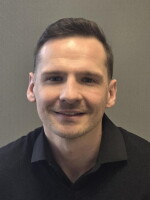
A new bill banning the use of remote-controlled locomotives outside of rail yards was announced Tuesday by Congressman Tim Kennedy.
Incidents involving remote locomotives have increased in recent years, leading to multiple deaths, serious injuries and safety risks.
Kennedy was in Buffalo to announce the proposed legislation preventing the use of remote-control locomotives on mainline tracks.
For Kennedy, it’s a decision to promote greater safety.
"Federal guidance in 2007 said remote trains should be short, slow and run on routes of less than half a mile," he said. "But since then, railroads have pushed the limits, and remote operations have gone further and further outside these rail yards, with the operator hundreds of feet away or more, with no clear view of what's happening on the tracks ahead. That is extraordinarily dangerous, and that puts people's lives at risk.
"We're not waiting for another disaster to strike to take action."
In June 2023, a 9-year-old boy was severely injured near Broadway when a remotely operated train began moving. Eight months later, nearby, a 47-year-old mother was killed by another remotely operated train. In Niagara Falls, a locomotive operating without a certified engineer on board derailed, spilling nearly 2,000 gallons of diesel fuel and destroying a family's property.
The proposed federal law would require a certified locomotive engineer to be physically in the cab of the lead locomotive and able to take control.
National Vice President of the Brotherhood of Locomotive Engineers and Trainmen Jim Lewis spoke on the danger of remote-control operations (RCO).
"We have watched employees get injured and killed with this RCO technology in the rail yards across the country," Lewis said. "Railroads have expanded the use of these remote-controlled trains onto main lines. This bill will give long-needed regulations. We are thanking Congressman Kennedy for putting some common-sense regulations into this bill, and hopefully it will save lives in the future."
Kennedy called Lewis a man who has dedicated his life to the operators of these trains, their safety, and the community's safety. When asked about the current state of the technology, Lewis said those who run it are not taking what's best for people's lives into account.
"The people that are running this now are just looking at it for a way of making a profit, not making this safe," he said.
If passed, a railroad faces a penalty of $1 million per day of violation.
Kennedy spoke on other rules being established under the bill, including blocking the Secretary of Transportation from waiving these rules for the biggest railroads while requiring the Federal Railroad Administration to audit Class One railroads, the nation's largest freight railroads, within six months.