-
 The Attica Prison Uprising of 1971 is one of the most disturbing episodes in the history of New York State and, indeed, the nation as a whole. It lasted…
 -
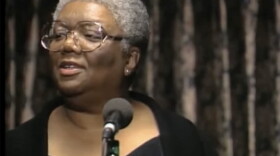 Buffalo has produced a number of prominent poets. But when Langston Hughes chose the work of Lucille Clifton, a then little-known poet from the East Side, for inclusion in his influential 1970 anthology “The Poetry of the Negro, 1746-1970”, it kicked off Clifton’s long career as one of America’s most beloved bards.
 -
 The first bridge across the Niagara River was begun by a boy who won five dollars in 1847 by coaxing a kite he flew on the Canadian side of the gorge to land on the American side.
 -
 The sinking of the U.S.S. Indianapolis in the early morning hours of July 30, 1945, is the worst disaster to befall a single ship in the history of the US Navy. One of the men in the water was Father Thomas Conway. But his compassion and bravery during those last, nightmarish nights and days stand as a testament to the human spirit in the midst of absolute horror.
 -
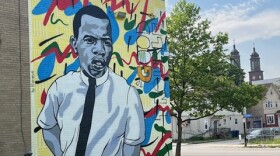 When John Lewis, the last of the great figures of the Civil Rights era, died at age 80 in 2020, Americans reflected with near-universal admiration on a life well lived. And, thanks to Lewis himself, they knew of the pivotal role that Buffalo played in molding this national icon.
 -
 On Feb. 13, 1938, Harugari Hall at 1257 Genesee Street near Kehr was jam-packed. An SRO crowd of 700 was on hand for a rally staged by the German-American Bund, a pro-Nazi group. But not everyone at the hall that night was there to listen to the speakers’ message of hate.
 -
 The educator Booker T. Washington advocated accommodation rather than a direct challenge to Jim Crow laws, in the hope that white America would gradually change. But a few other black leaders espoused a more confrontational strategy, one that called for an immediate end to racial prejudice. They were led by a young Harvard- and Berlin-educated author and intellectual from Western Massachusetts named W.E.B. Du Bois.
 -
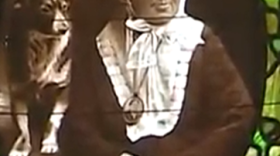 Mary Elizabeth Johnson Lord was a prominent Buffalo matron. “Kind to all animals herself, it pained her to see them abused,” as one local newspaper put it. Now, more than a century and a half later, if they could, they’d still be thanking her.
 -
 Since the very first NHL game ever played in Buffalo, way back in October 1970, the pregame ceremonies have featured the singing of both the Canadian and American national anthems. Every night, every day, always.
 -
 The early history of Buffalo’s gay and lesbian community is lost, mainly because same-sex affection was so thoroughly stigmatized by society at large. It was, in the famous phrase of the 19th century, the love that dare not speak its name. But luckily, the city’s later LGBTQ history is known to us – largely through the remarkable efforts of two scholars who reconstructed what queer life was like in Buffalo from the 1930s to the early ’60s.

© 2026 Western New York Public Broadcasting Association
140 Lower Terrace St.
Buffalo, NY 14202
Toronto Address:
130 Queens Quay E.
Suite 903
Toronto, ON M5A 0P6
Mailing Address:
Horizons Plaza P.O. Box 1263
Buffalo, NY 14240-1263
Buffalo Toronto Public Media | Phone 716-845-7000
BTPM NPR Newsroom | Phone: 716-845-7040
140 Lower Terrace St.
Buffalo, NY 14202
Toronto Address:
130 Queens Quay E.
Suite 903
Toronto, ON M5A 0P6
Mailing Address:
Horizons Plaza P.O. Box 1263
Buffalo, NY 14240-1263
Buffalo Toronto Public Media | Phone 716-845-7000
BTPM NPR Newsroom | Phone: 716-845-7040

Play Live Radio
Next Up:
0:00
0:00
Available On Air Stations


