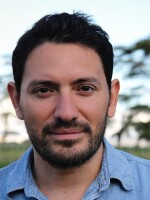
EYDER PERALTA, HOST:
Anyone who has been embarrassed about mispronouncing a word - or worse, a name - can rest assured that they're in good company. Newscasters, politicians and other public figures tripped over plenty of words this year. In fact, there's a list, thanks to the language teachers at Babbel and the people at The Captioning Group, who add closed captions to screens. At the top of their list of the most mispronounced words is a very common painkiller.
(SOUNDBITE OF ARCHIVED RECORDING)
PRESIDENT DONALD TRUMP: Aceta - well, let's see how we say that. Acetaminophen.
PERALTA: Acetaminophen. President Trump isn't alone in stumbling over all those mushy vowels. Watching us all get tripped up this year is Esteban Touma, a linguist and cultural expert at Babbel. And just a note - Babbel is one of our sponsors. Welcome. And first, I mean, did I get your name right?
ESTEBAN TOUMA: Well, that sounds like the perfect pronunciation in Spanish. But I'll let you know my last name is from Palestine, so it's actually pronounced Too-ma.
PERALTA: Touma. Esteban Touma (laughter). Esteban, now it's your turn. Why don't you read the list for us?
TOUMA: Well, I will start by telling you I'm not a native speaker of English myself. And so keep that in mind as I pronounce these words.
PERALTA: And a disclaimer from me, Esteban, because English is also my second language. So we're in the same boat.
TOUMA: You know the struggle. You know how it feels. So we have acetaminophen, Alex Murdaugh, Denzel Washington, Louvre, Mounjaro, the Swedish Hollywood actor Alexander Skarsgard and, of course, Zohran Mamdani.
PERALTA: And Zohran Mamdani's name tripped people up all year long as he ran for mayor of New York City, and sometimes he got testy about it.
(SOUNDBITE OF ARCHIVED RECORDING)
ZOHRAN MAMDANI: The name is Mamdani, M-A-M-D-A-N-I. You should learn how to say it.
PERALTA: It's hard to imagine - right? - that we're going to collectively get Mamdani right next year. I mean, people still mispronounce Vladimir Putin all the time.
TOUMA: All the time. It was one of our words in the past. I think what Zohran Mamdani said about his name kind of goes to the core of our list and the ideas of it because he explained later in an interview that he doesn't take an issue with genuine mispronunciation, but repeated or deliberate mispronunciation crosses the line. And I think that kind of pinpoints of what we try to communicate - the notion that it doesn't necessarily mean that you have to say these words correctly, but trying to approach a correct pronunciation is already a step towards mutual understanding.
PERALTA: I mean, look. I think we here at NPR try to make room for our correspondents to say their own names correctly, and we get pushback from some listeners who dislike unfamiliar or foreign pronunciations. Does it matter anymore in a global world if people pronounce words or names differently?
TOUMA: First of all, the way you pronounce something is dependent on the dialect in which you speak and which part of the U.S. or the world you're from. We tell our learners that it's OK to get it wrong and make mistakes. But the important thing is that attempt because that means that you are trying to understand other cultures, other words, other languages, and you're creating a - an approach to someone.
PERALTA: Esteban, why don't you leave us with some advice? What tricks or tips can you share for getting a hard word or a hard name right?
TOUMA: Well, I am a little bit biased, obviously. But I would say try to learn a new language. It will put you into the mindset of, like, oh, there's this group of muscles that I've never moved in my throat in this way before. And try to approach it from that perspective - from the perspective of, like, I know I'm not going to get it completely right, maybe, but here's my attempt. Let's go at it. Let's try to do it right.
PERALTA: Esteban Touma is a linguist and cultural expert at Babbel. Esteban, thank you.
TOUMA: Eyder, thank you so much.
PERALTA: One name we never mispronounce is BJ Leiderman, who does our theme music.
(SOUNDBITE OF RICHARD HOUGHTEN'S "FADING INTO PURPLE") Transcript provided by NPR, Copyright NPR.
NPR transcripts are created on a rush deadline by an NPR contractor. This text may not be in its final form and may be updated or revised in the future. Accuracy and availability may vary. The authoritative record of NPR’s programming is the audio record.